First of all, regardless of all the claims made in the document, I find it awesome to see such a gigantic writeup that tries to be at least a bit internally consistent. It reminds me of Bit451 [1][2], although that one was simply insane.
So about Cicada: the document quickly notes that the 'human unique identifier' is at the core of the proposal. It is claimed that it "allows us to prevent Sybil attacks and ensure everyone has a voice in the system". It promises to do this with cryptography and 'biocryptics', a word which isn't really that widely used in the research community. It seems to mostly refer to anonymous biometrics authentication systems [3][4]. In that field I can find nothing about preventing Sybil attacks.
Additionally, preventing Sybil attacks in a decentralized system, by relying on a biometric measurement that is fully under the control of an attacker seems doomed to fail. No matter how much cryptography you throw at it.
There must either be some central party designating trust in a certain (anonymous) biometric, or there needs to be a web of trust that is sufficiently connected and resistant to manipulation. A combination, with good checks and balances and distribution of power, seems to be the way to go most of the time.
Personal identity seems like a generally intractable problem, despite the lofty goals stated in the introduction. And without it, the document is built on a foundation of sand.
An argument that I find myself having quite frequently about Bitcoin and pseudonymity is that pseudonymity and concealing identity is not a feature of the system, but rather that defining two-way identity in any sort of useful way is such a difficult problem that solving it would be a bigger achievement than Bitcoin itself.
Seeking a biological equivalent to a non-portable key in a TPM is pretty hopeless, and that's what you'd need to get a HUID -- not just a hash fingerprint that anyone can appropriate, but an internal signing mechanism to allow zero-knowledge verification of identity. And the inverse problem, the Sybil problem, is just as intractable, and as far as I know has never really been solved without a centralized issuing authority or reliance on a scarce resource (like proof-of-work, which even there solves only a weak variant of the Sybil problem by conflating the unit of "identity" with a unit of "work").
We know multiple ways to reliably identify someone using biological markers with near-perfect accuracy. Yes, that lack of perfection leaves open the possibility of subversion, but so what? You'll grow old and die waiting for the perfect solution.
Human biometrics are subject to spoofing, replay, and birthday attacks. You can't extract enough entropy from any extant biometrics to be useful, secure, and free of collisions (without having an intolerably high false negative rate).
This seems to me like the whole misadventure of putting finger print readers in door locks and phones: Someone noticed that fingerprints work quite well for identifying people in customs and law enforcement and simplified that thought to "fingerprints can identify people" - ignoring the circumstances of how fingerprints are taken when they work.


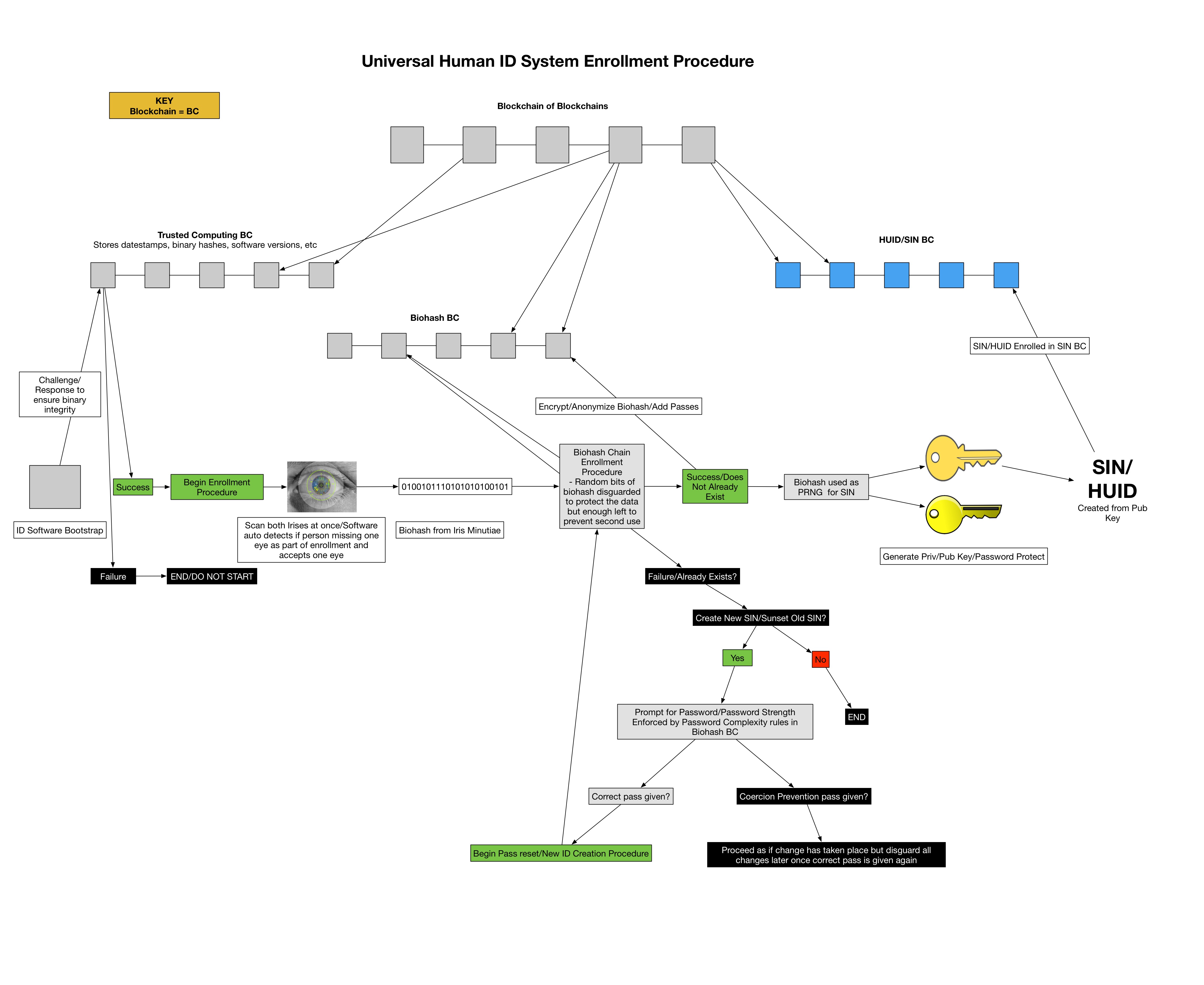
So about Cicada: the document quickly notes that the 'human unique identifier' is at the core of the proposal. It is claimed that it "allows us to prevent Sybil attacks and ensure everyone has a voice in the system". It promises to do this with cryptography and 'biocryptics', a word which isn't really that widely used in the research community. It seems to mostly refer to anonymous biometrics authentication systems [3][4]. In that field I can find nothing about preventing Sybil attacks.
Additionally, preventing Sybil attacks in a decentralized system, by relying on a biometric measurement that is fully under the control of an attacker seems doomed to fail. No matter how much cryptography you throw at it.
There must either be some central party designating trust in a certain (anonymous) biometric, or there needs to be a web of trust that is sufficiently connected and resistant to manipulation. A combination, with good checks and balances and distribution of power, seems to be the way to go most of the time.
[1] http://bit451.org/
[2] https://news.ycombinator.com/item?id=8728231
[3] https://www.esat.kuleuven.be/cosic/publications/article-1462...
[4] https://en.wikipedia.org/wiki/Private_biometrics