While I also like 7z a lot and use it all the time, it's really not a better format that RAR. Higher compression ratios? Sure, marginally. But for archival RAR is still the better choice as it supports recovery records, which 7z still does not. I also found it more difficult to restore data from a partial 7z file (i.e. trailer data is missing) compared to an incomplete RAR file.
Yeah, zstd is awesome. I built a webapp that uses it via wasm and the decompression speed is incredible, so much so that I store everything in zstd and decompress it on the app load. My wasm binary also does advanced search and tag insertion and stuff in addition to zstd but it's only 38kb. I wish zstd was supported natively by web browsers. The 8kb implementation of zstd is only half as slow as wasm, so even that is still viable.
Good point. Looks like it’s related to window size (incl for lzma btw). Lzma stays 0.9 and goes to 88.5 post 8.8M gap. Zstd -14 is close to lzma up to 4.4M where it jumps to 91.5. 14L seems to be the best overall for this scenario staying at 1.9.
zstd is a good default for e.g. filesystem compression, but if you're making an archive file, presumably you're looking for higher compression and LZMA would be a better fit.
By these charts, if I only need 5-10 megabytes per second of compression on a single core, LZMA2 wins significantly on ratio, and still decompresses at well over 100. If I'm doing a backup, or sending/receiving over my internet connection (which only has 2MB/s of upload), LZMA2 easily wins. If I need speed then zstd wins.
On a more realistic note: few years back, I've added zstd compression to our log subsystem (hand written direct buffers, native code, in-process, java). For the same CPU utilization if provides twice dense compression compared to regular [-6] gzip (the topic in the title). Zstd is =much= faster on decompression as well, and it this case - unparalleledly better as it uses twice less disk.
zstd is 'silicon valley' (the tv show) - life imitates fiction, except entirely open source
There is 2 softwares I will buy for myself if I still use Windows: WinRAR and Internet Download Manager. In fact, I will buy them in the future regardless the Windows usage.
I read GP more as "sure they're profitable, but they didn't exactly have many expense to cover so it's not a very useful comparison to make at this point" than doubt in the profitability itself.
E.g. when SpaceX started designing the Falcon 9 the losses were astronomical (pun intended) but a car dealership running more of a profit at the same time doesn't have much to say about which business is doing better.
Culonavirus (GGP from the original? Dunno how to refer to that)? Yeah - you could make a good guess of that even just by looking at the username they chose :D. Doesn't mean wolfi1, shezi, or myself can't have a serious discussion stemming from it as well.
Who knows though - maybe I missed that German company financials are also funny :p. Wouldn't be the first time something flew well over my head.
The original author and also creator of the RAR format, Eugene Roshal, is Russian. I think he moved to the US way back in the day, but not sure about that. He has been very private with his life.
The company doing the software distribution, is located in Berlin. The Managing Directors for that company seem to have Turkish names, but I don't know if they're Turkish.
BTW, Looking for some info I just found a website [0], clearly AI generated (but not necessarily meaning the content is false) claiming Eugene Roshal had severe kidney failure this past month, and he's waiting for surgery. They're asking for donations. There are some names on who's theoretically behind it [1] but they don't link to any LinkedIn profile or personal site. I can't find any other references. The BTC wallet they're using for donations hasn't seen any traffic ever. BE WARY, SMELLS FISHY.
WHOIS information for the domain shows it's registered in the Philippines. The name of the owner does not show up in any of the about section people. So I think those are fake.
In addition to what the other comments said ("WHOIS information for the domain shows it's registered in the Philippines"[0] etc), the "hospital bed" picture is blatantly AI-generated. If you zoom on his face, you can see that it looks extremely unnatural.
I suspect that someone's running a script that looks for public (-ish, Eugene has a Wikipedia page at least) figures without active social media presence and creates fake donation websites with AI-generated texts and pictures.
If my suspicion is correct, this is one of the most evil scams I can imagine.
A donation site that takes only bitcoin as payment is very suspicious, surely there are alot of services like GoFundMe who would accept him if it was genuine. I think this is a fake scam
edit: can you write in brackets after the URL that it may be scam. I think alot of people may just go to the URL without reading your warning
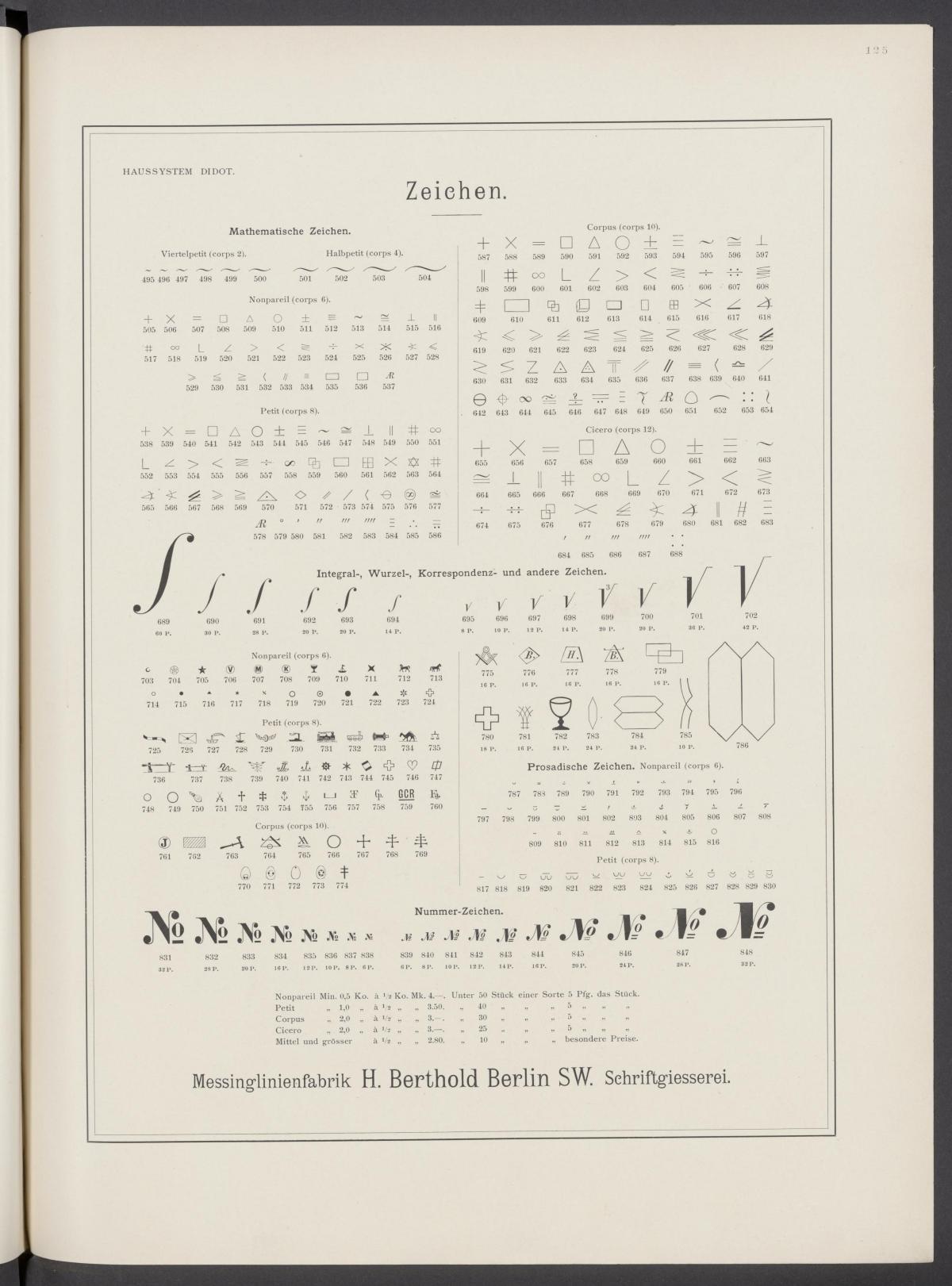
The image referencing "Haussystem Didot" is an example of a catalog not containing the Angzarr symbol in question.
I did not find any evidence for earlier examples in any of the very few scans I looked at, nor does a search through the Google Books scans give any indication for words that seem related to the concept.
This would be such a fantastic find! Could you point out a specific example?
I'm sorry, but I don't understand your comment at all. The linked article does not refer to Didot, nor does the Wikipedia page for the glyph in question.
Neither the wikipedia page for the Didot family, nor for Histoire générale des voyages shows the Angzarr symbol, I've carefully checked on all the scans on these pages. In fact, any occurrence of the symbol would pre-date the current earliest known example (1963) by 200 years, and that would be a great find. If you have an actual reference, please let us know!
Check the photos in the article, specifically this one [1]
"Haussystem Didot", the title of the catalog, refers to a letter setting by the printing agency Didot, which is the one I linked on wikipedia.
The Gallica scans are linked in the wikipedia article. Each of those chapters has hundreds of pages.
I highly doubt that you eye scanned thousands of pages in French handwritten and mixed typesetted ... within less than a day. You definitely must be lying, they take months to read.
> The Gallica scans are linked in the wikipedia article. Each of those chapters has hundreds of pages.
I went through a bit of it and saw no instance of the symbol. If it's in there, would you mind saying which chapter and which page? Or some hint about what context people could find it in? The maps I saw (maps were pretty easy to find, too, since most of the page numbers for them are "NP") didn't seem to use this symbol.
Neither did I read all these pages nor did I pretend to.
> Neither the wikipedia page for the Didot family, nor for Histoire générale des voyages shows the Angzarr symbol, I've carefully checked on all the scans on these pages.
You have linked these two Wikipedia pages[1][2], implying that they confirm your extraordinary claims of how obvious and well-known this symbol is. I could in fact check within a single day that the symbol does not appear on any of the 15 images linked in these pages.
So unless you can produce evidence for your claim that "that symbol was used as a notation symbol in those star charts and azimutal maps?", it is quite disingenuous to expect anyone to take it seriously. Expecting someone else to read "thousands of pages" to confirm or deny YOUR claim makes it even less worthy of consideration.
If you do have actual, material evidence for your claims, everyone in this thread would very much like to see it.
That's great and all, but the point is that there still isn't a single known (to the community of people trying to find the origins of that symbol, so, safe to say, the vast majority of people in general) appearance of the character in the actual text (i.e. used for its purpose), so if you have an example of a map/book/anything where this character was used, providing the link/scan/photo would be very appreciated.
I've worked for 15 years as a freelance Python/Django developer, in projects both big and small. I've created entire projects myself, including front-end and hosting; and I've integrated in teams in roles ranging from team lead to devops specialist. I have worked with Python, Django, numpy, SQL, JS and Typescript, Angular, Java, C++, Jenkins, k8s, and most everything in-between; in recent years I've started doing work on LLMs and GenAI in general.
If you have an interesting project, email me at j@spielmannsolutions.com and we'll talk!
I've worked for 15 years as a freelance Python/Django developer, in projects both big and small. I've created entire projects myself, including front-end and hosting; and I've integrated in teams in roles ranging from team lead to devops specialist. I have worked with Python, Django, numpy, SQL, JS and Typescript, Angular, Java, C++, Jenkins, k8s, and most everything in-between; in recent years I've started doing work on LLMs and GenAI in general.
If you have an interesting project, email me at j@spielmannsolutions.com and we'll talk!
Back when we played the original game, there was a bug that leads to underflow in the money. You had to build a tunnel that spanned the entire width of the map, which would cost just more than 2 billion dollars, underflowing and giving you 2 billion instead. Afterwards, the game was a pure sandbox, and that's the only way I played it as a kid.
This looks really nice and people interested in mathematical computing should try it out. I certainly will.
Apparently many commenters here do not understand the word "alternative", which means "a thing that you can choose to do or have out of two or more possibilities", and instead take it as "equal in every respect".
I love that! Argparse is such an old and boring solution to such a simple problem that we need more like this. And I have hope that one of the solutions will make it into the standard library at some point.
There are some others like yours:
Google's python-fire (1)
Docopt (2), which creates the cli from the documentation instead of the other way around
This is a pet peeve of mine: csv was a bad format already when it was created, because it intermixes data with meta data, ie it uses characters that can appear as either data or control characters, leading to escaping issues. This is in addition to being under specified as to which characters are used as control characters.
It was outdated from the start because ASCII already has specific characters for file, group, record, and
item separation. Using this would give broad compatibility and a wider feature set (eg. more than one table in a file) while retaining all the benefits of csv.


Looks pretty profitable to me.
reply